
Cigar Storage
Cigar Rooms and Cigar Cabinets
Cedar-lined, sealed and held at sixty-eight to seventy per cent, made as furniture rather than as equipment. A cabinet for a drawing room, a table to sit beside a chair, or a whole room lined out and plant-controlled.
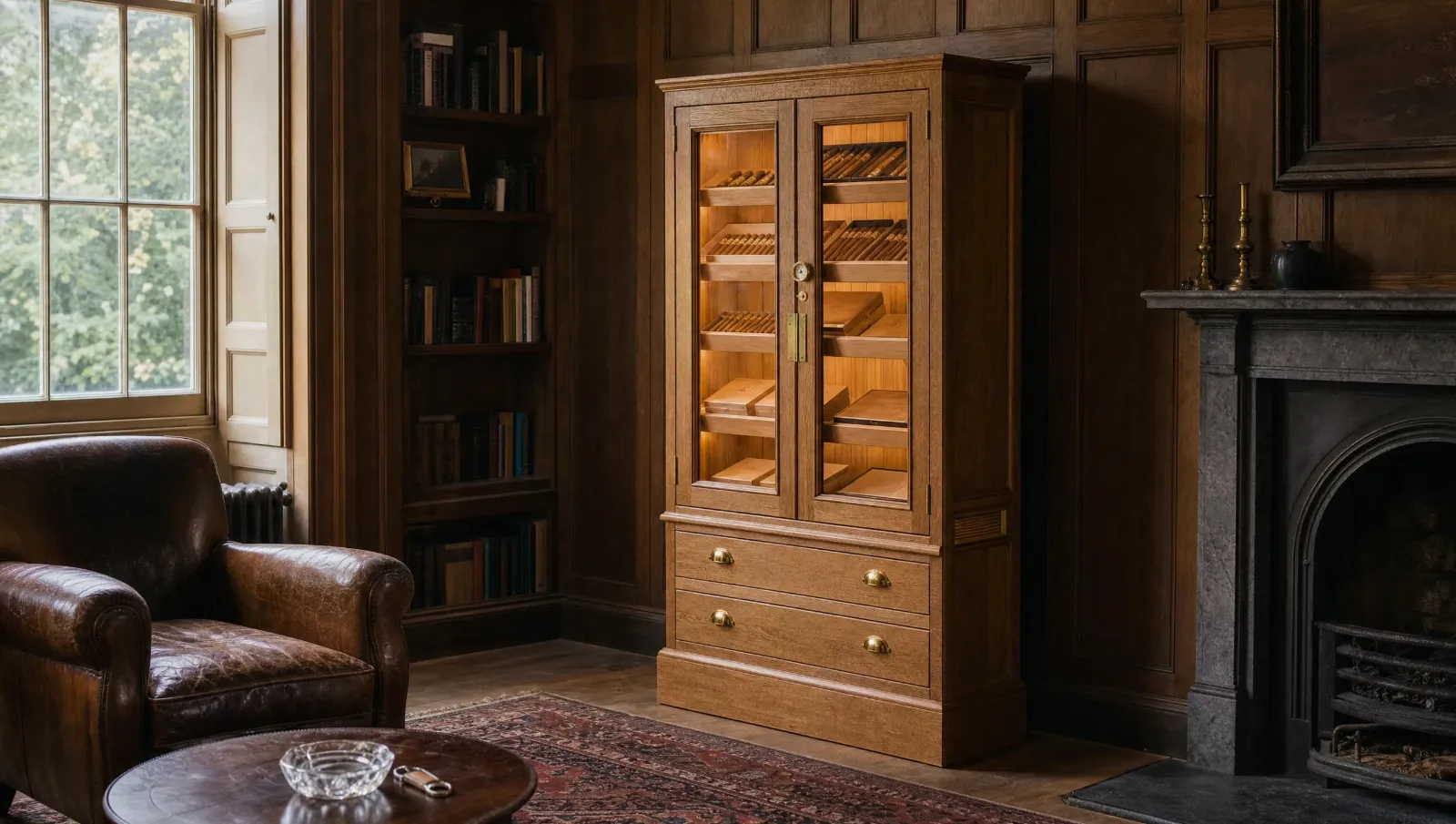
A humidor is a simple piece of physics and a difficult piece of joinery. The cabinet has to hold a sealed volume at a steady humidity and temperature, through a Suffolk winter with the heating on and a July week with the windows open, without the lining moving, the seal hardening or the doors dropping out of line. Everything that makes that work is decided at the drawing stage: the timber, its moisture content, how the lining is fixed, where the air moves and where the humidification sits.
We came to it the way we came to gun cabinets. A client wanted something that was not a black lacquered box on chrome legs, and not a steel cabinet with a grille, but a piece of English furniture that happened to hold four hundred cigars properly. It is the same problem as a gun room: a technical requirement that has to disappear inside cabinetwork.
The cabinet
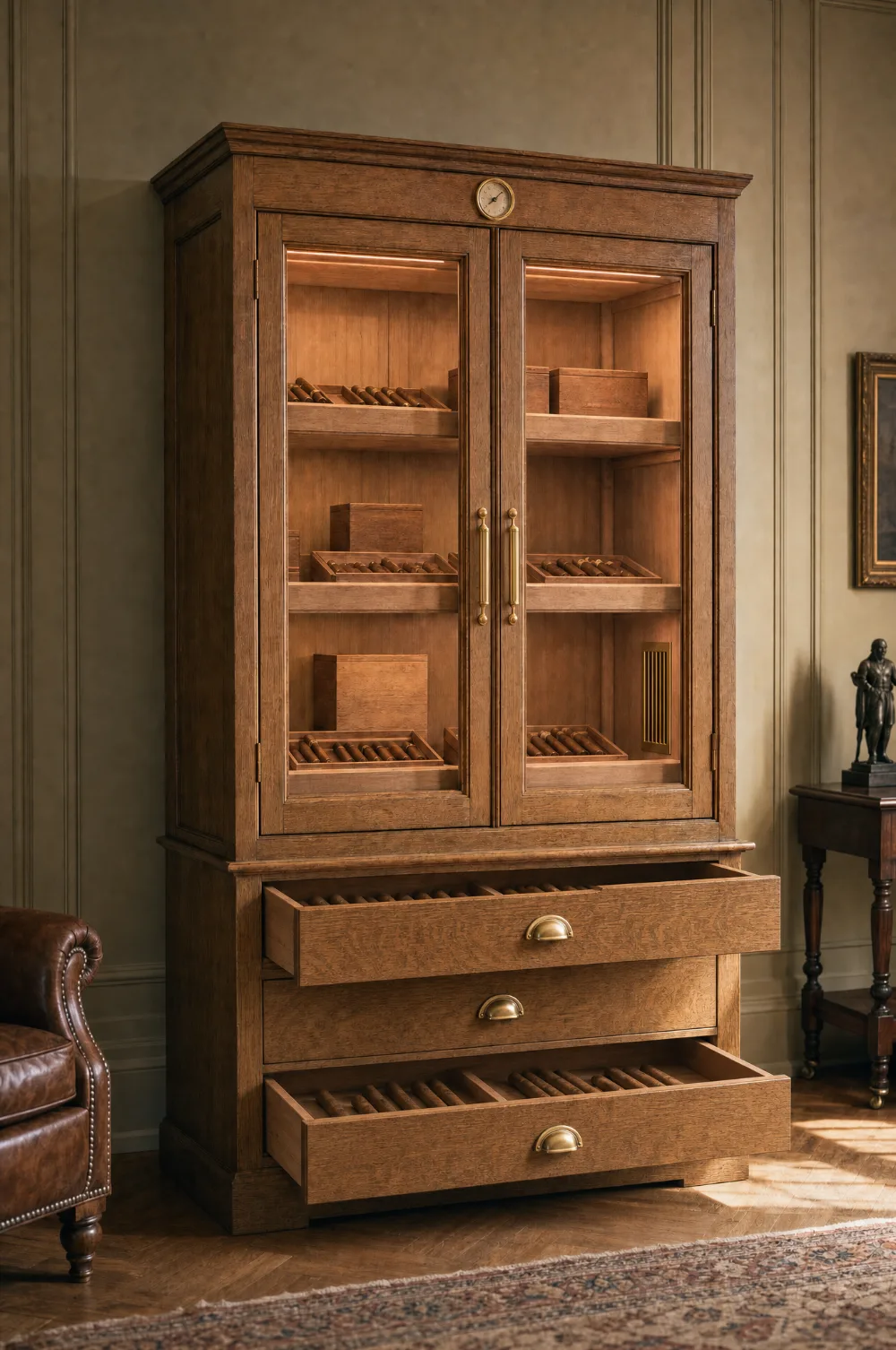
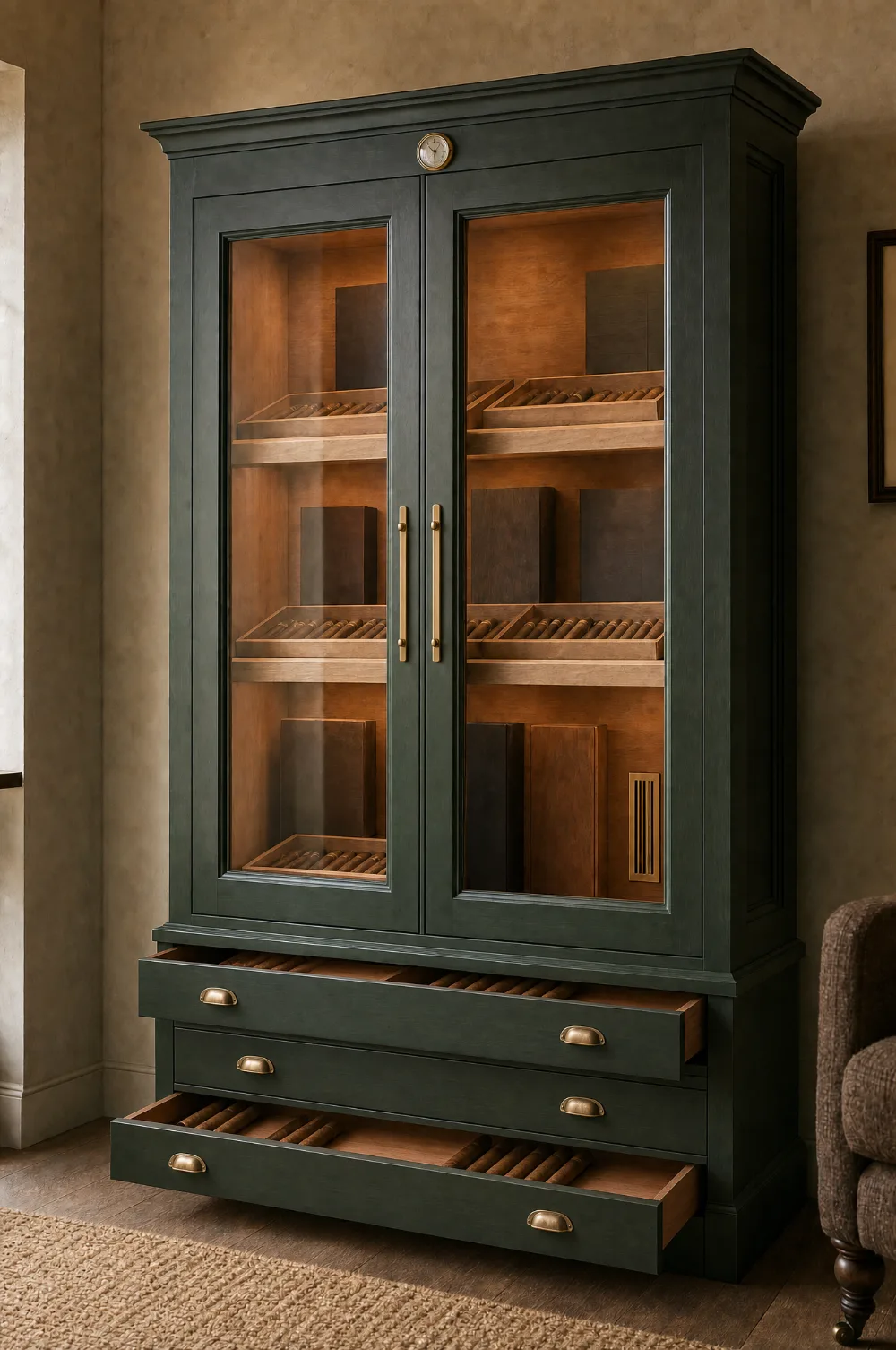
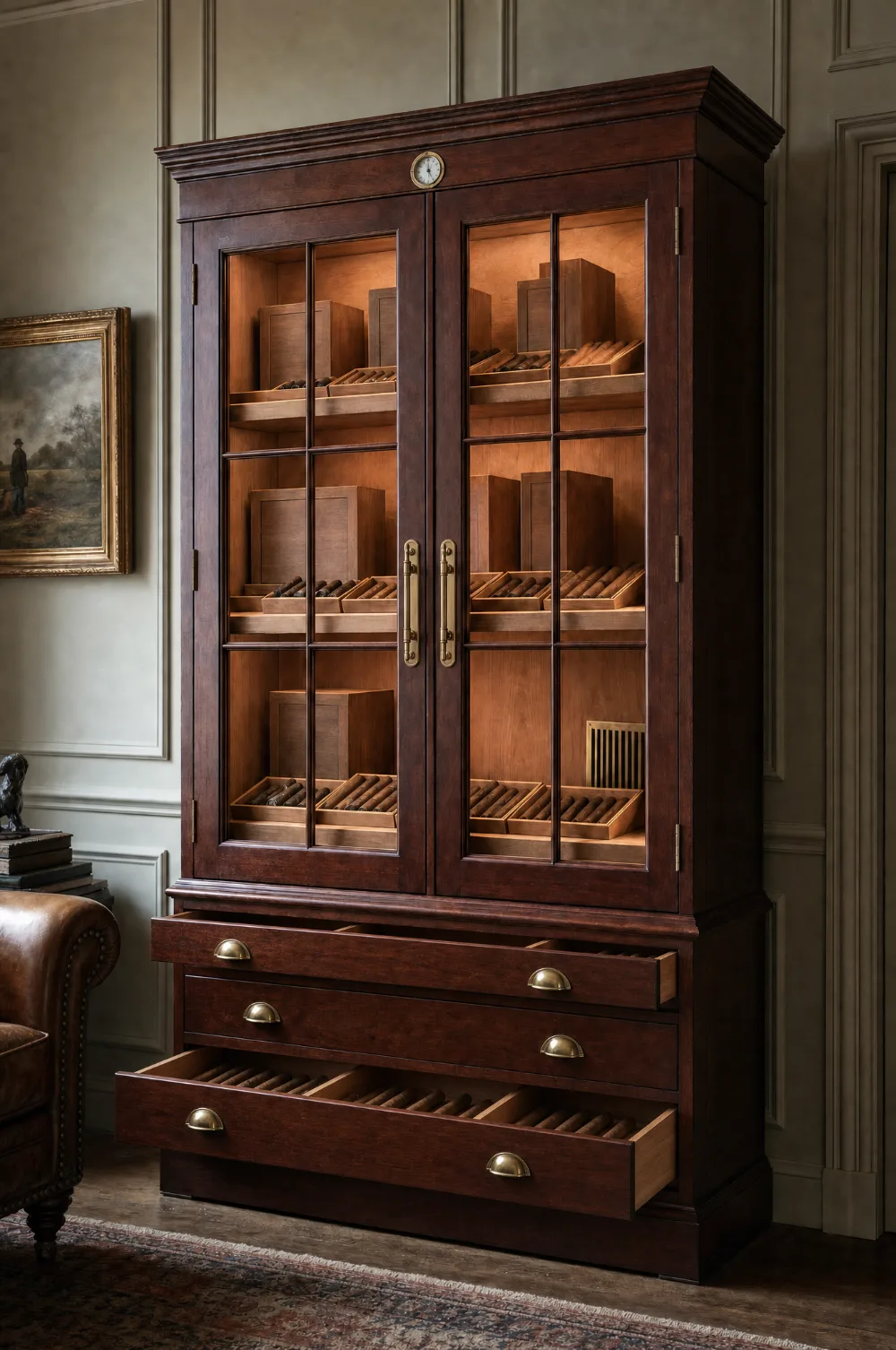
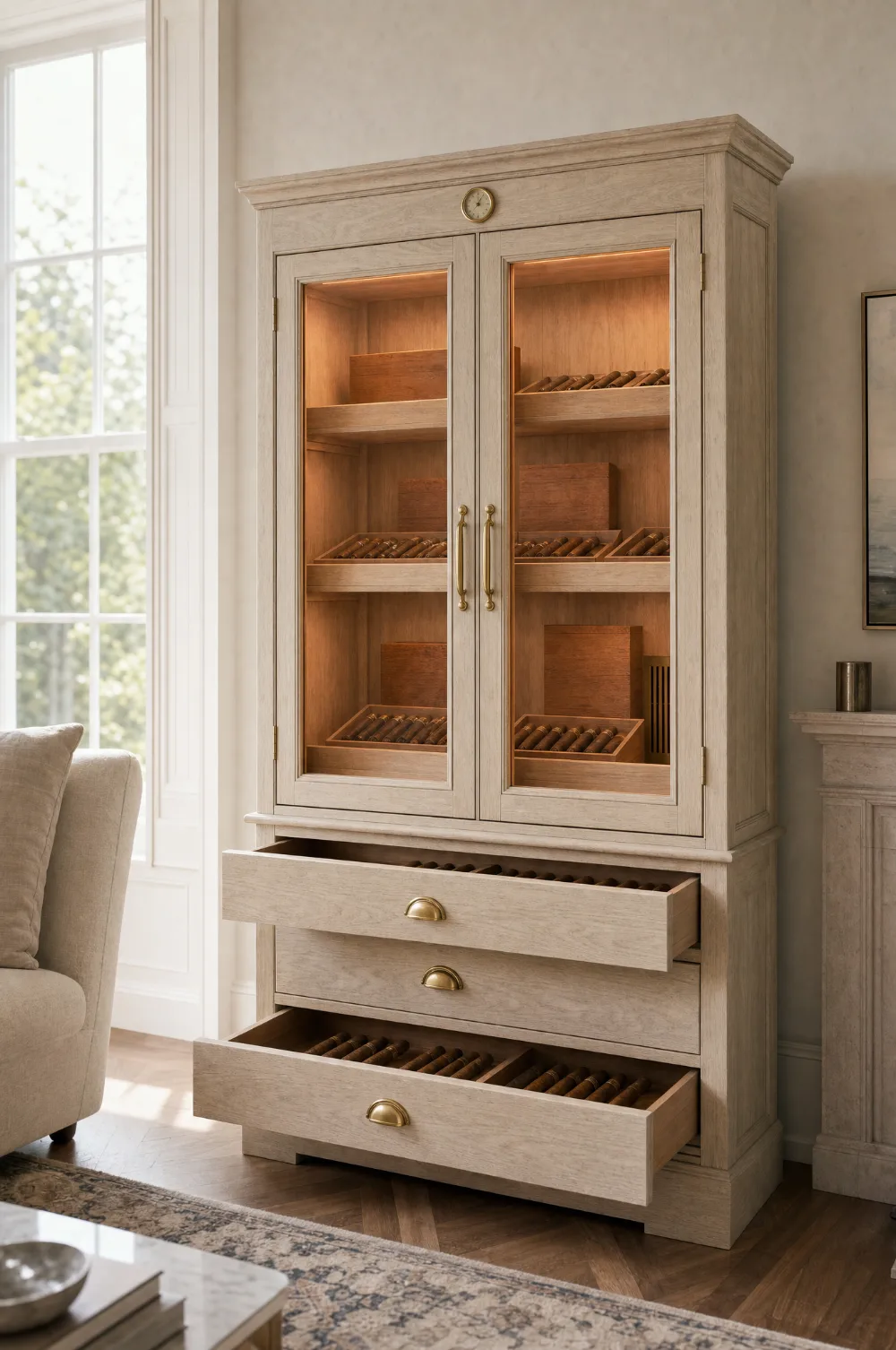
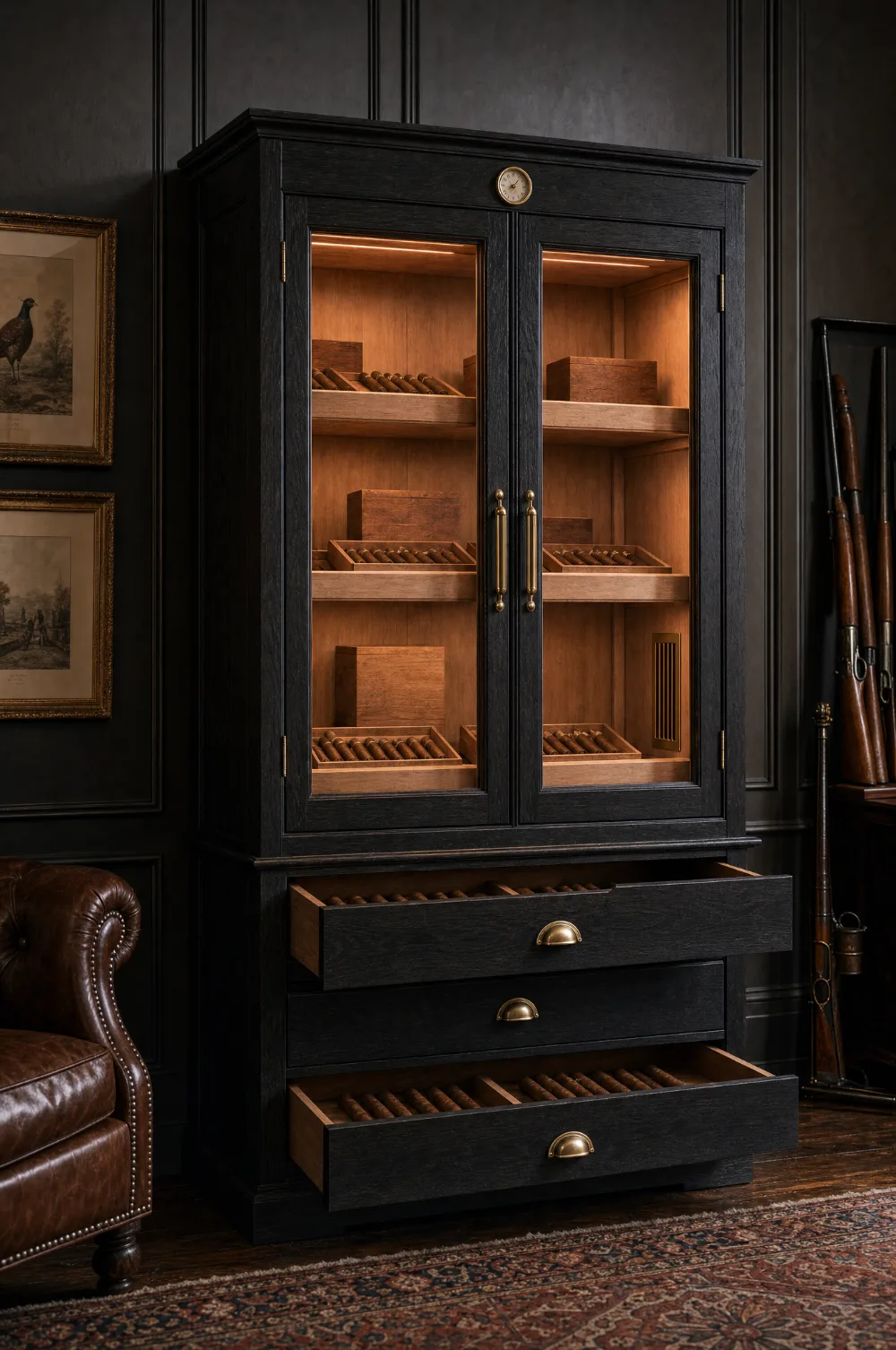
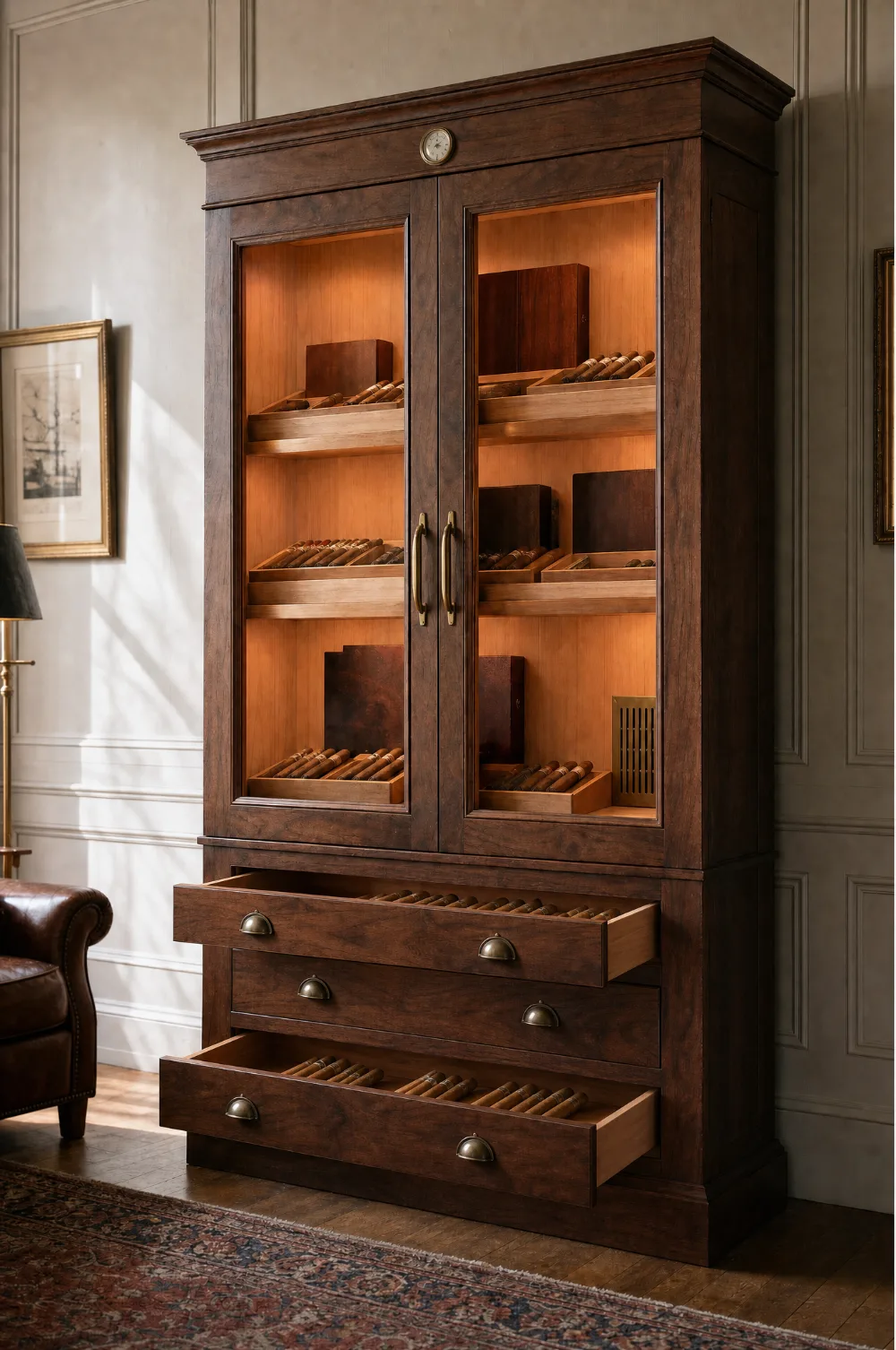
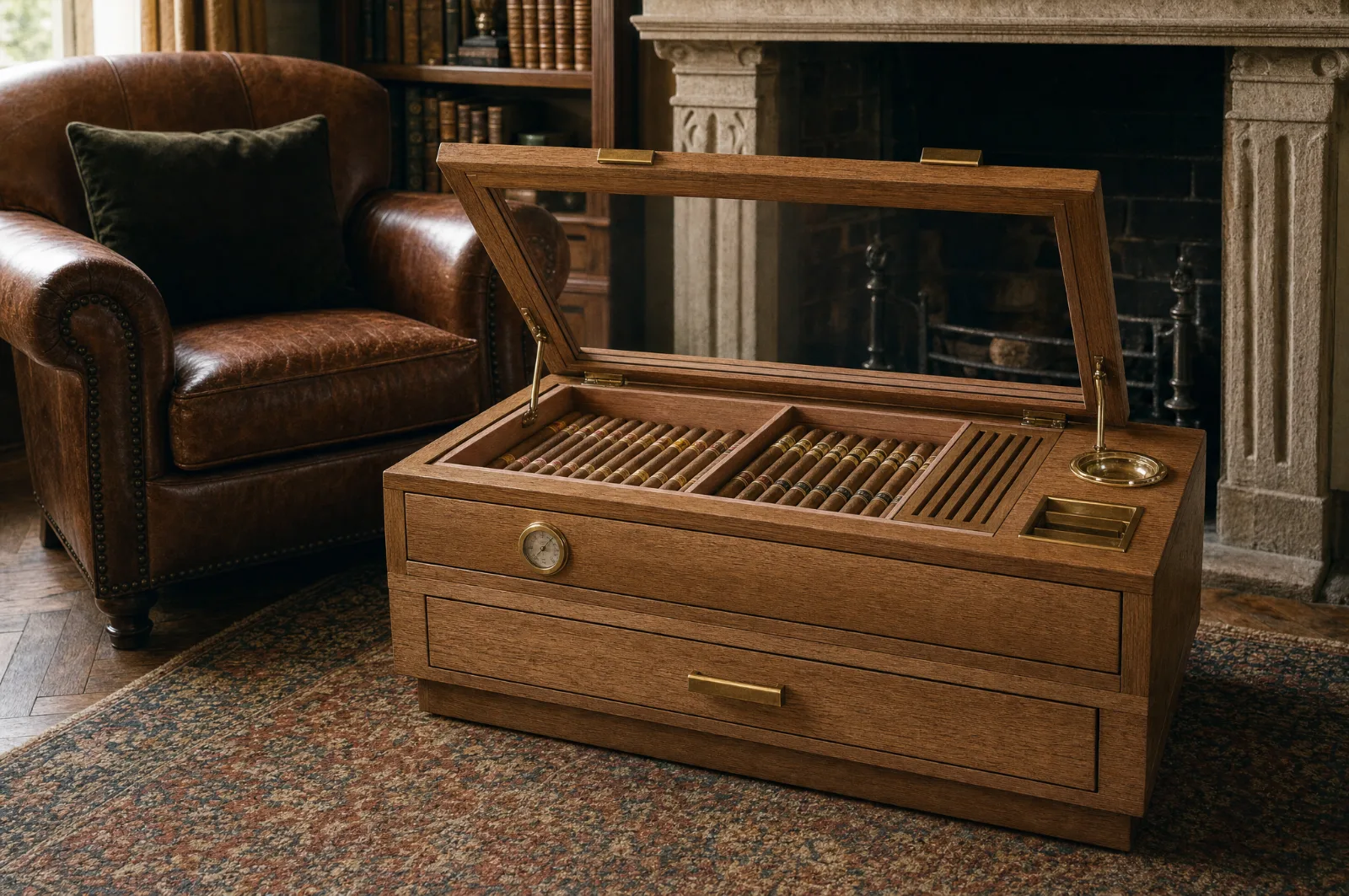
A glazed upper section on a drawer base: sliding cedar trays and standing room for factory boxes behind the doors, lay-flat drawers below, a hygrometer in the frieze and a ventilation grille let into the lining. The same carcase is made in oak, cherry, walnut or hand-painted, and the handles, the glazing bars and the mouldings are drawn to suit the room it is going into rather than picked from a list.
And the smaller pieces
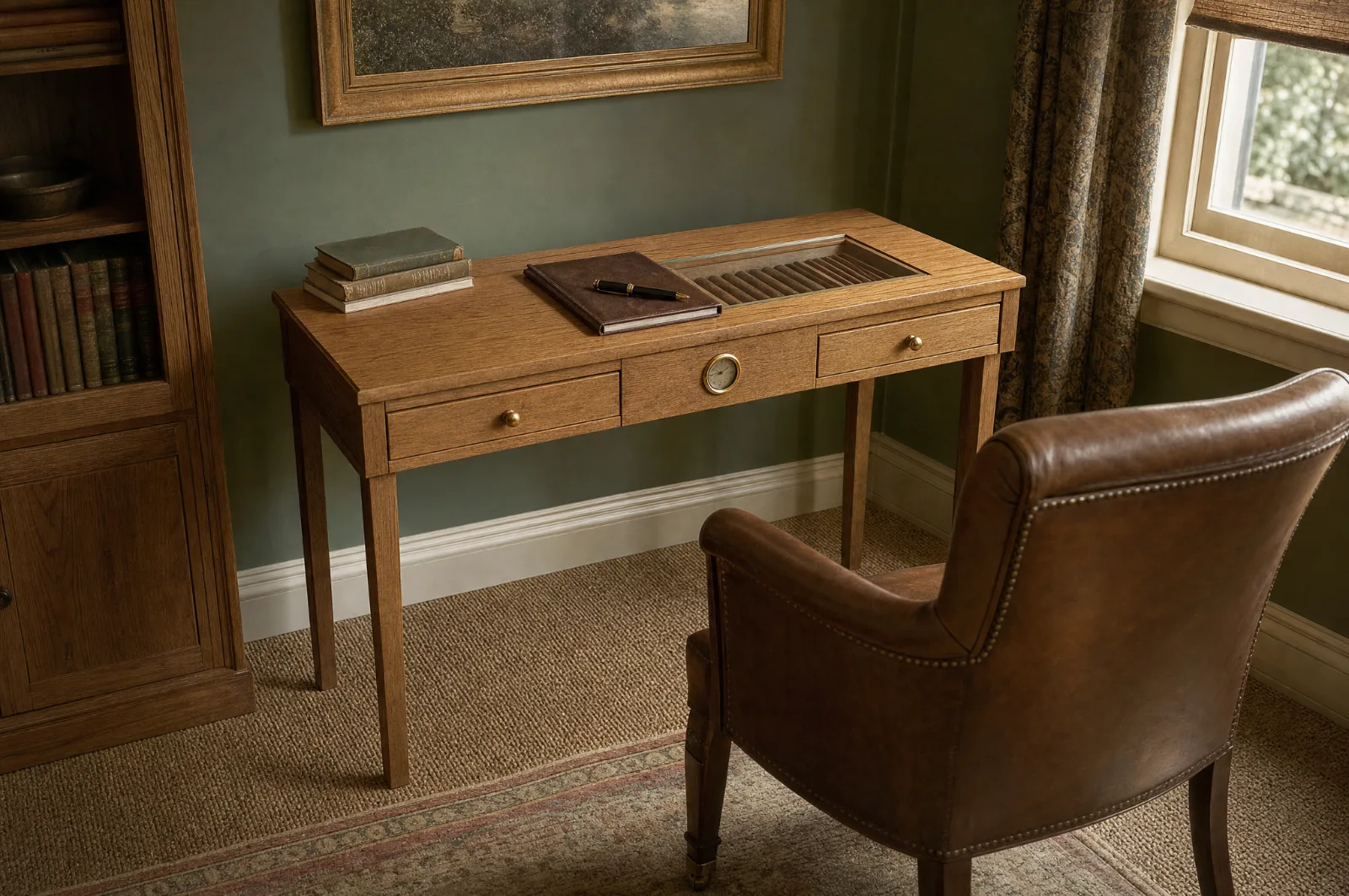
Not everybody wants a cabinet standing in the room. There are three smaller pieces drawn as starting points — a writing table with a sealed bay let into the top, a low table beside a chair with a hinged glazed lid, and a cabinet table carrying a shallow display bay over a working cabinet — and, at the other end of the scale, a room lined out properly with its own plant and filtration.
- Cigar cabinets and humidor tables — the pieces, their capacities and how they are built.
- Walk-in cigar rooms — lining, sealing, plant and shelving for a whole room.
- Ventilation and filtration — what to do about the smoke, which is a separate problem entirely.
How they are built
The lining is twelve millimetre solid Spanish cedar, unfinished, conditioned to twelve or thirteen per cent before it goes anywhere near a carcase, and fixed on slip battens so it can move without splitting. It is sanded no finer than a hundred and eighty grit, because a burnished surface stops exchanging moisture and exchanging moisture is the entire point of it. Nothing goes on it: no oil, no wax, no lacquer, ever.
The seal is a platinum-cured silicone bulb running in a machined groove, not a stick-on strip. There is no ferrous metal inside the sealed volume, because a cold steel surface in a humidified box is a condensation site; hinges, catches and grilles are solid brass, bronze or stainless, and drawers run on cedar runners rather than metal ones. Glass is laminated and low-iron, set on blocks at the quarter points and bedded with a neutral-cure silicone that will not attack the cedar.
Humidification lives in a machined pocket behind a pierced brass grille, so the client sees a grille and never a sachet. The same pocket takes either two-way humidity packs or an electronic unit, which means passive or active is a decision at order stage rather than a different cabinet. Where a unit is fitted it runs on a low-voltage supply from a driver in a vented plinth, outside the sealed volume; there is no mains voltage inside a humidified box.
Guide prices
Humidor tables and smaller cabinets run from about £3,000 to £6,000 including VAT, depending on size, timber and whether the humidification is passive or active. A full-height cigar cabinet of the kind shown above sits above that. A walk-in room, lined, sealed, shelved and plant-controlled, starts at around £15,000 including VAT. These are guide figures to place the work, not a quotation — every piece is drawn and priced on its own.
Cigar work is drawn, made, finished and fitted alongside the gun cabinets and gun rooms, in the same timbers and finishes. How a commission works · Prices and lead times
Questions we are asked
What humidity does a cigar cabinet need to hold?
Sixty-eight to seventy per cent relative humidity, held steadily through a Suffolk winter with the heating on and a July week with the windows open. Everything that makes that work — the timber, its moisture content, how the lining is fixed, where the air moves and where the humidification sits — is decided at the drawing stage.
Which timbers do you make cigar cabinets in?
The same carcase is made in oak, cherry, walnut or hand-painted. The handles, the glazing bars and the mouldings are drawn to suit the room it is going into rather than picked from a list.
Do I need a cabinet or a whole room?
Both are made here. A cabinet for a drawing room, a table to sit beside a chair, or a whole room lined out with its own plant and filtration. There are three smaller pieces drawn as starting points, and at the other end of the scale a room lined out properly.
Humidity, seasoning and holding sixty-eight — what the number means, how to season a new cabinet, and passive against active humidification.
Cedar, and what it actually does — the lining is a working part of the humidor, not decoration.
Ageing cigars at home — how long it takes, boxes and cellophane, and telling bloom from mould.