
Sporting Cabinetmakers · Suffolk
The Workshop
Everything on this website is made in one joinery workshop: a run of black weatherboarded barns on Stonham Road in Mickfield, six miles north of Stowmarket. Machine shop, bench room and finishing shop under one roof, with our own cabinetmakers and our own polisher.
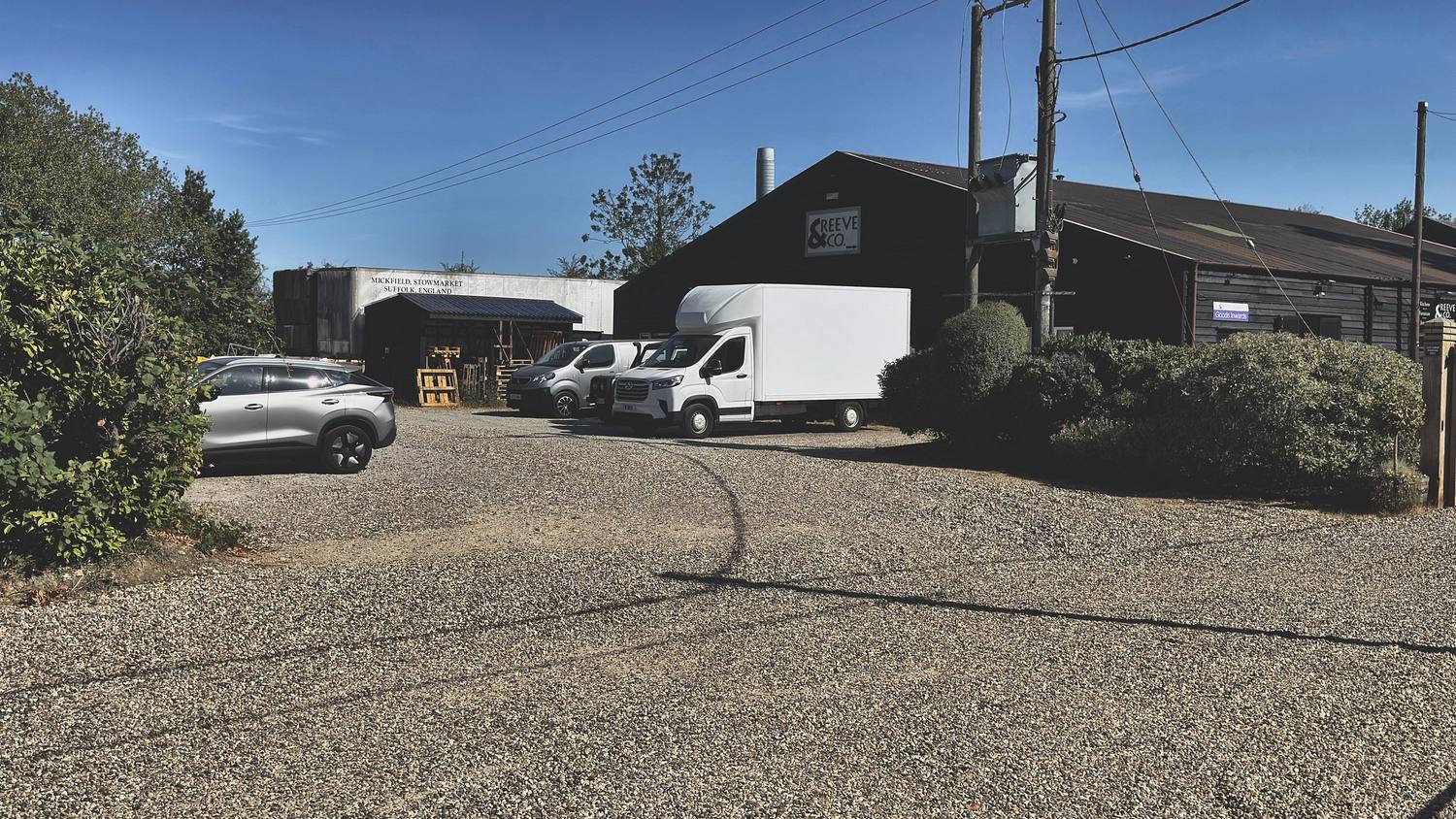
That sentence gets used a great deal in this trade and it is worth being specific about what it means, because a surprising number of firms selling “handmade British” cabinets are ordering a carcass from one supplier, a door from another and a finish from a third, and assembling the three in a unit on an industrial estate.
We are not being sniffy about that — it is a perfectly reasonable way to run a business. It is simply a different business from this one, and the difference shows up in the things clients care about: whether we can match a forty-year-old moulding, whether we can hold a delivery date, and who you actually speak to when something needs adjusting in year three.
On this page
See the work
Finished cabinets, interiors, a timber-faced firearms door and workshop making, shown with the discretion this work requires.
Where it is
Stonham Road, Mickfield, Stowmarket, Suffolk IP14 5LS. Mid-Suffolk, between Stowmarket and Debenham, twenty minutes from Ipswich and about an hour and three quarters from London by road.
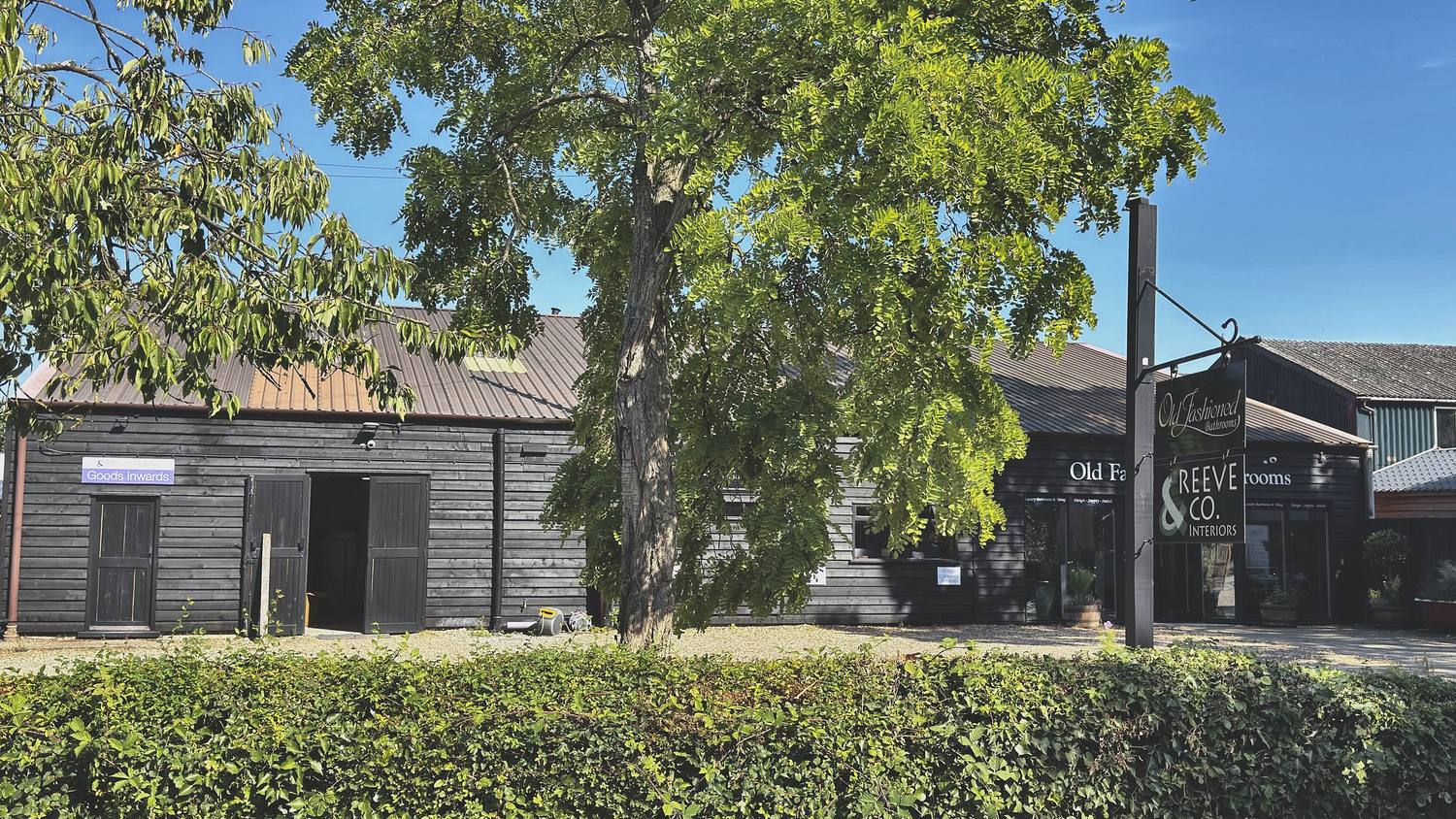
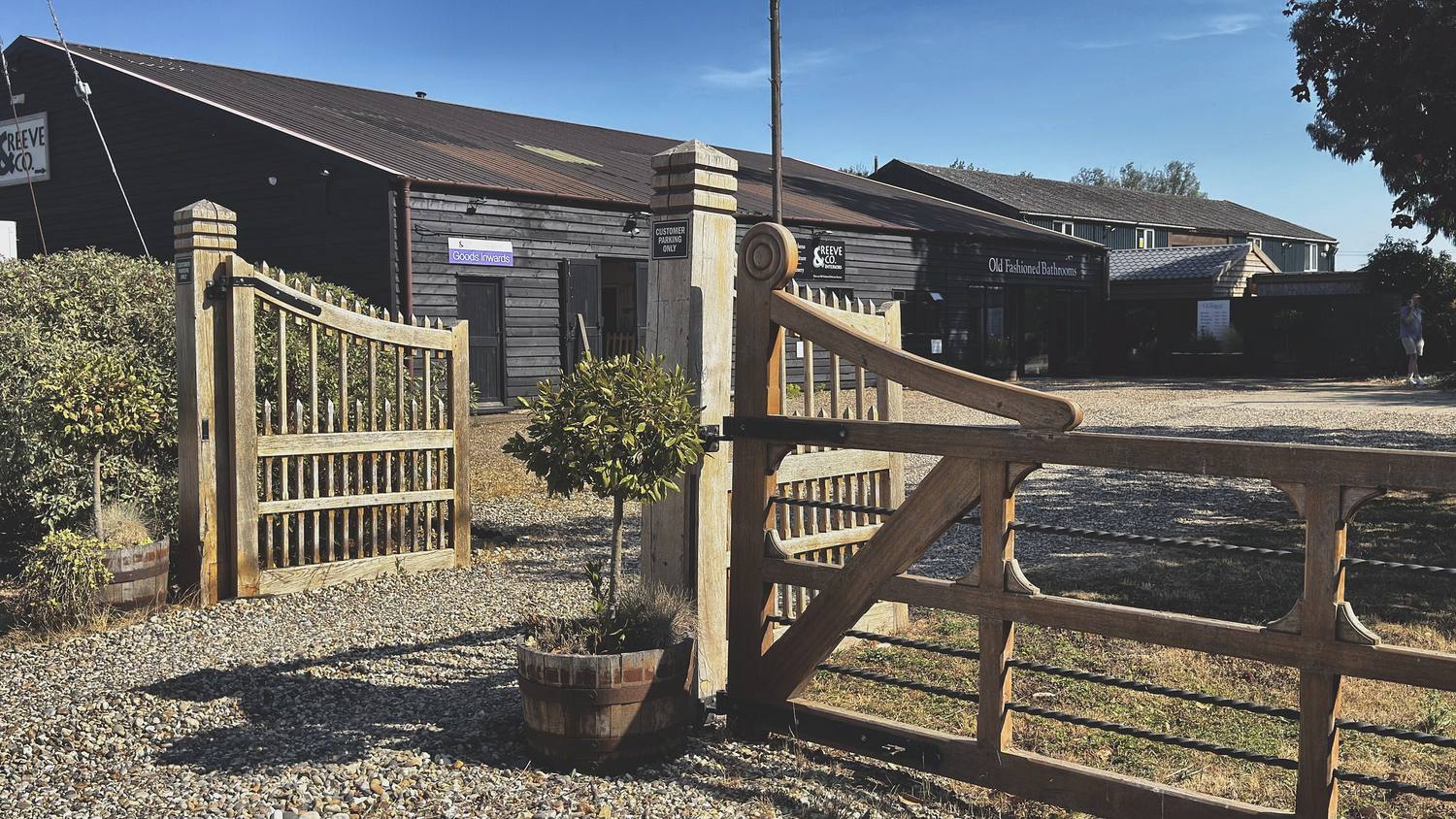
The buildings are agricultural in origin and black weatherboarded, which is what most working buildings in this county are. There is a showroom on the same site, a goods-in yard, and a set of gates and fencing we made ourselves — which is either a good sign or an indulgence, depending on your view of joiners.
It matters less than you might think where a workshop is, and more than you might think that it is a workshop rather than an office. Everything we quote comes from people who will be at the bench making it.
How the workshop is laid out
Three spaces, in the order the work moves through them.
| Space | What happens |
|---|---|
| Machine shop | Timber comes in, is selected, cut, planed, thicknessed, moulded and machined. Extraction to every machine |
| Bench room | Setting out, jointing, assembly, fitting, glazing, ironmongery. Where the actual cabinetmaking happens |
| Finishing shop | Spray booth, hand polishing, painting, antiquing. Kept separate for dust, and it has to be |
Keeping finishing physically separate from machining is not fastidiousness — airborne dust settling on a wet finish is the single most common reason a good piece comes out looking ordinary. It is the reason we will not finish on site if we can possibly avoid it.
The people
Four cabinetmakers, a designer and a polisher, plus fitters who install, and me.
That is a small team by any measure, and it is deliberate. It means the person who drew your cabinet is fifteen feet from the person cutting it, and both of them are within earshot of the person who will polish it. It is also why we do not take on more work in a quarter than we can make properly in it — a promise held is worth considerably more to an architect than a promise made.
The consequence you will actually notice is that there is no salesman. When you ring, you get someone who can answer a technical question about steel thickness, glass or fixings without going away to ask.
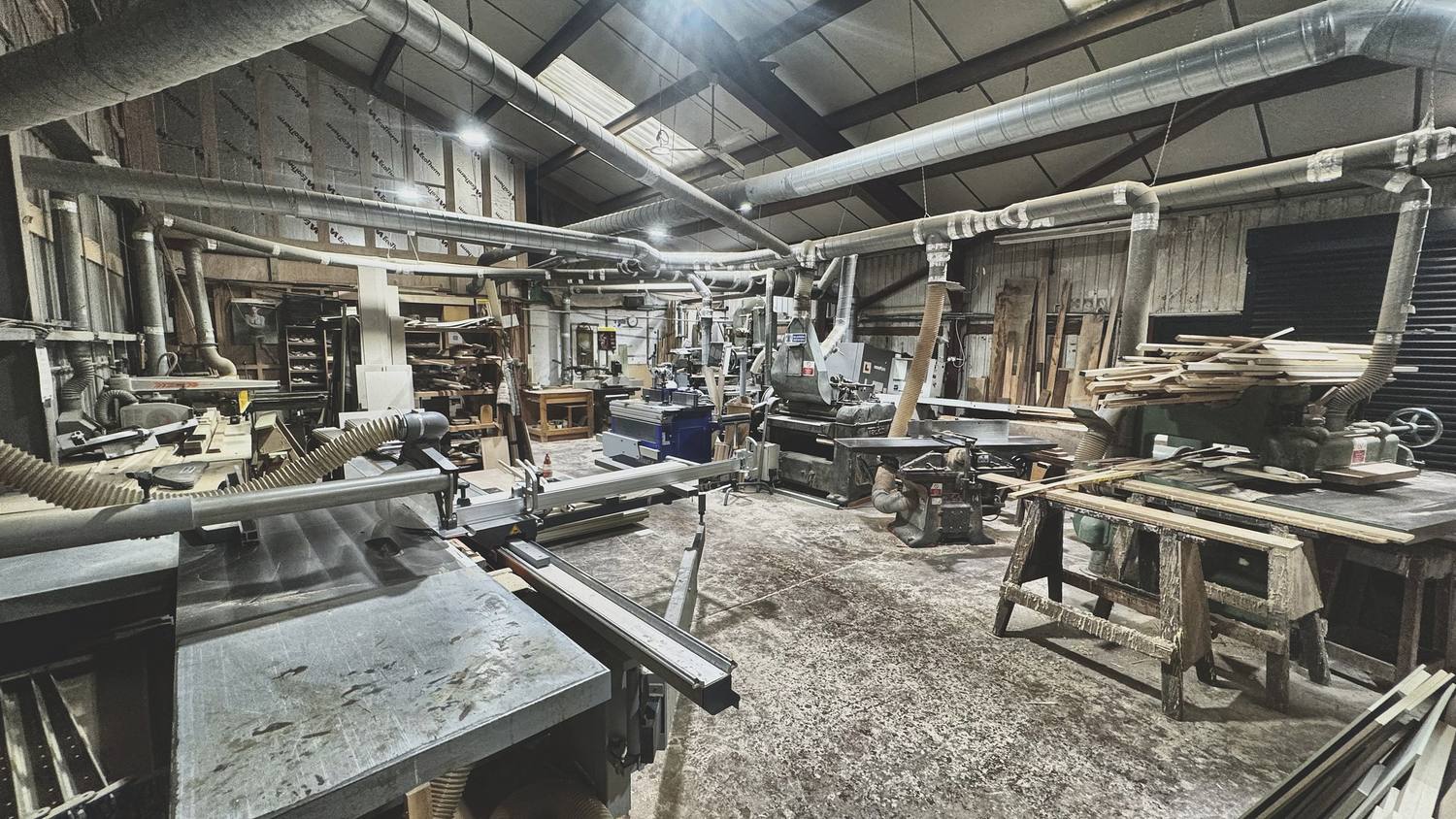
The machine shop
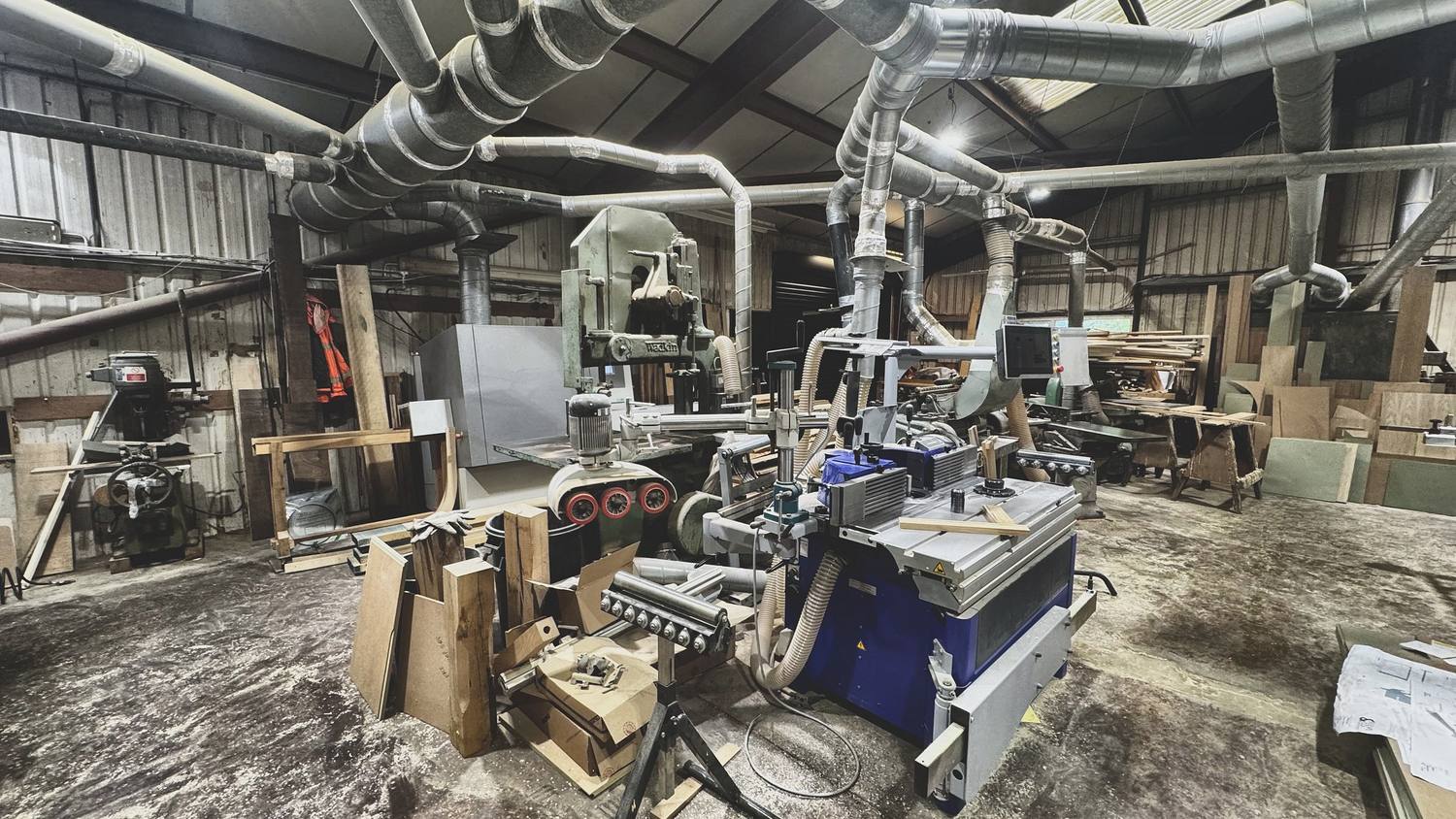
Traditional machinery alongside CNC, with dust extraction ducted to every machine.
The division of labour between the two is straightforward and it is not the one people assume. The machine does repeatable accuracy. The bench does everything that matters. CNC is excellent at cutting forty identical rack components to a tolerance no hand can hold, and at producing a set-out that is genuinely square. It is useless at deciding which board goes where, at reading a piece of figured walnut, or at fitting a door to an opening that is out of true — which is most openings.
So we use it where it earns its place: repeat components, jigs, templates, and the parts of a job where consistency is the whole requirement. Everything else is done the way it has been done for three hundred years, because nothing better has turned up.
The bench room
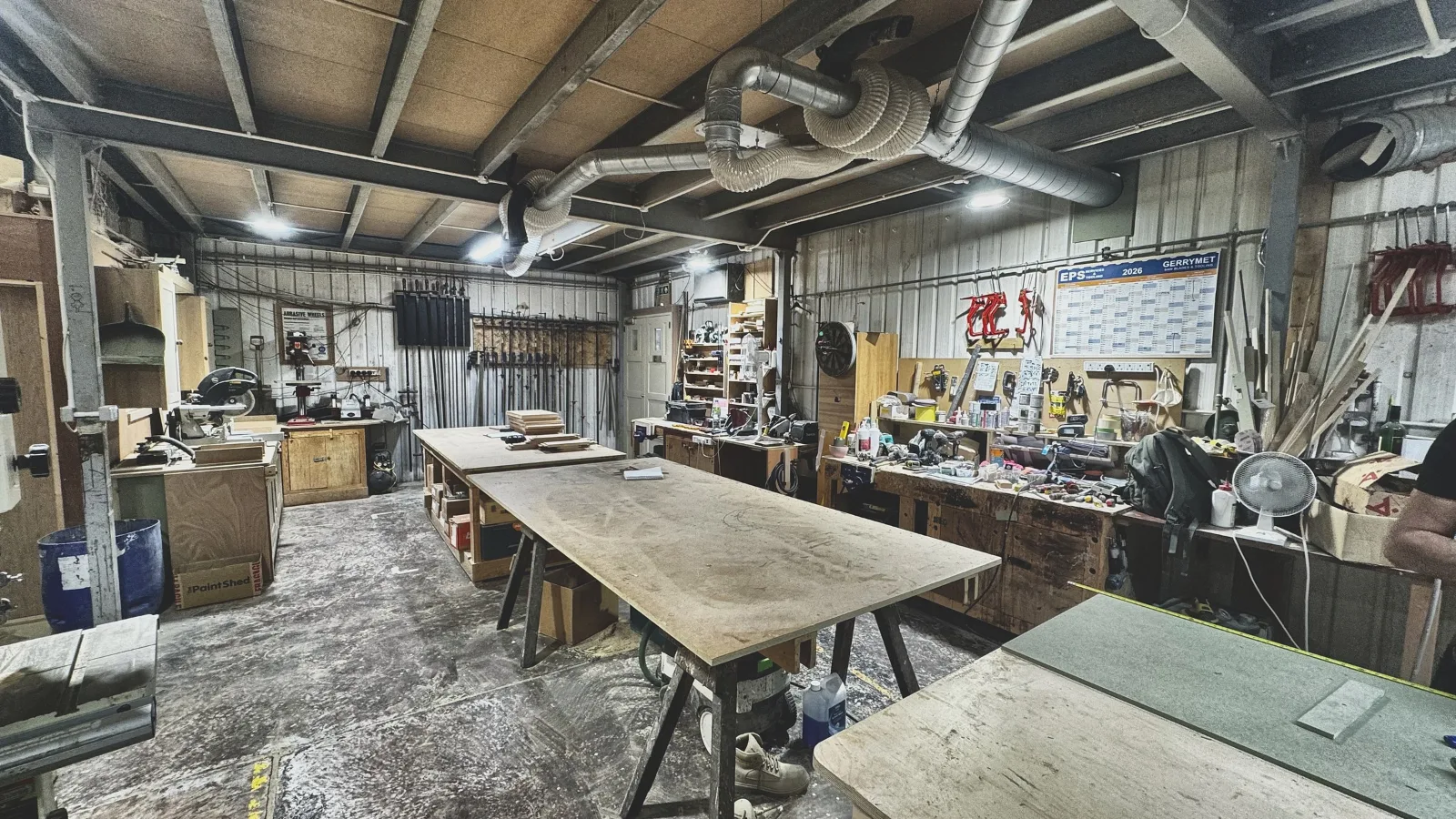
Where a stack of machined components becomes a piece of furniture.
Setting out is the first and most important thing that happens here — a full-size rod or drawing from which every component is marked, so that the cabinet is built to one set of marks rather than to a series of measurements taken from each other. It is unglamorous and it is why the doors fit.
Then jointing, assembly, drawer fitting, hanging doors, glazing, and ironmongery. Cabinets are assembled complete in the shop, doors are hung and fitted, drawers are made to their openings, and the whole thing works properly before it is taken apart for finishing. A cabinet that is first assembled on site is a cabinet whose problems are discovered in your house.
This is also where the interiors go together — racks cut to a client’s actual guns, baize and felt lining, cleaning racks, cartridge drawers and ammunition provision. See gun room design and layout for what that involves.
The finishing shop
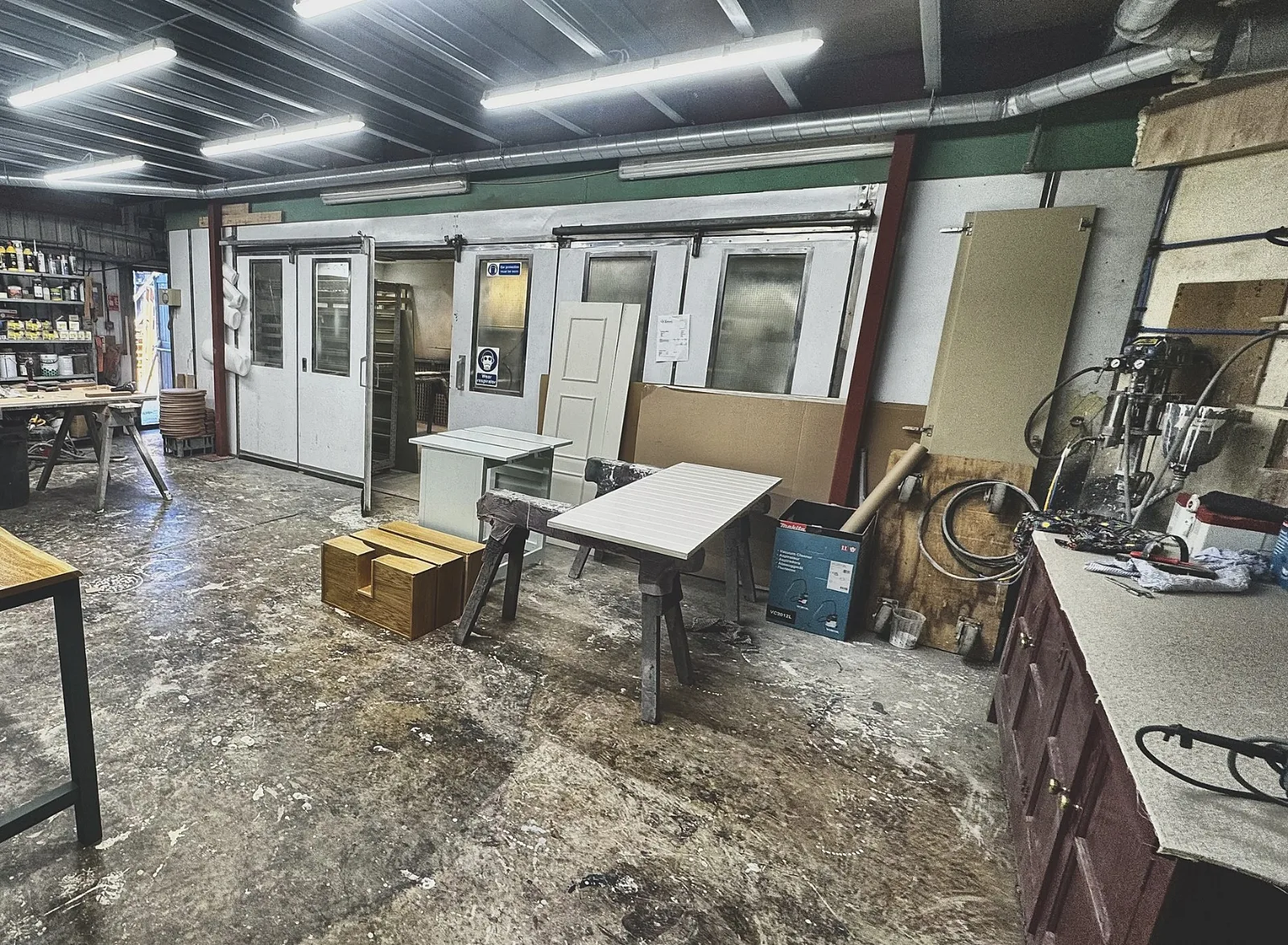
The room that decides how the piece looks, and the one clients underestimate.
We have our own spray booth and our own polisher, and everything is finished here: French polish built up by hand over days, hand-oiled finishes, hand-painted work with the grain properly filled, and antiquing done by hand where an old room would otherwise reject a new piece.
This is the single reason we can promise a match. Matching an existing piece of joinery is a finishing problem far more than a timber problem — the moulding gets you close, the colour and the sheen get you the rest of the way, and the last ten per cent is a person standing in front of both pieces adjusting. That is not work you can send out and then stand behind.
It is also why we would rather you sent us a physical sample than a photograph. An offcut, a spare moulding, a drawer front from a cupboard nobody uses. A colour matched from a screen is a colour that is nearly right, and nearly right at close range is worse than deliberately different.
Where the steel comes in
A gun cabinet is the one thing we make that is two trades at once, and the sequence matters.
The steel enclosure — 3mm (0.12in) throughout, folded and reinforced, with folded doors and a folded return behind the frame on the hinge side — is built and fitted as the core of the piece. The timber is then made around it rather than applied to it, which is the opposite of how a steel locker with a timber front is put together, and it is why the proportions come out as furniture rather than as a box with a face on it.
Locks are fitted here, glazing is bedded here, and the whole thing is checked working before it leaves. The specification sheet that goes with the cabinet — steel thickness, glass specification, lock model, fixing type and centres — is written from what was actually built, not from a template. The full detail is on the specification page.
Why any of this matters to you
Four practical consequences, which is the only reason to put a workshop on a website at all.
- We can match thingsBecause the finishing happens here, in front of your sample, by the person who will answer for it.
- We can hold a dateBecause we control the whole sequence. No supplier’s lead time sits inside ours.
- We can change something mid-buildWithin reason, and at a price we can tell you before we do it — because it is our bench and our programme.
- Somebody is still here in year threeTimber moves, especially in a house with new underfloor heating. If a door has settled or a drawer has tightened, the person who made it is still at the bench.
Waste, heat and the roof
Waste timber from the workshop heats the buildings. It is a small thing and we are not going to pretend it is a sustainability programme, but it is our own offcuts warming our own benches rather than filling a skip, and in a Suffolk January it is a genuinely good arrangement.
There are electric vehicle chargers on site, and solar on the workshop roofs is part of the plan for the buildings. We would rather say what is actually in place than what is aspired to.
Visiting
By appointment, and we would much rather you came.
Seeing a cabinet in the flesh answers questions that photographs cannot: the weight of a glazed door, what 26mm (1in) laminated security glass actually looks like in a frame, the difference between book-matched oak and oak, and what French polish does that a lacquer does not. Twenty minutes here saves a great deal of correspondence.
It is a working joinery shop with machinery running, so ring first rather than arriving to a locked door and a dust extractor. Contact details are here.
Sporting Cabinetmakers is a trading name of Reeve & Co Interiors Ltd, a joinery house founded in Suffolk in 2015. Stonham Road, Mickfield, Stowmarket, Suffolk IP14 5LS.
The same building makes kitchens, freestanding furniture and whole-house joinery for the rest of the Reeve & Co Group, which is why a cabinet can be finish-matched to joinery elsewhere in the house.
Questions we are asked
Where are your gun cabinets made?
In our own workshop at Mickfield, near Stowmarket in Suffolk — machine shop, bench room and finishing shop on one site, by our own cabinetmakers and our own polisher. Nothing is subcontracted and nothing is imported and badged.
Do you use CNC or is it all hand work?
Both, and the division matters. CNC does repeatable accuracy — identical rack components, jigs, templates, a square set-out. The bench does everything else: selecting boards, reading figured timber, fitting a door to an opening that is out of true. Neither is better; they are for different jobs.
Why does having your own finishing shop matter?
Because matching an existing piece is a finishing problem more than a timber problem, and the last ten per cent is a person standing in front of both pieces adjusting. That is not work you can subcontract and then guarantee. It also means finishing happens in a clean room rather than in your house.
How big is the team?
Four cabinetmakers, a designer and a polisher, plus fitters who install. Small deliberately — the person who drew your cabinet is fifteen feet from the person cutting it, and we do not take on more work in a quarter than we can make properly in it.
Can I visit the workshop?
Yes, by appointment, and we would rather you did. Seeing 26mm laminated security glass in a frame, or book-matched oak beside plain oak, answers questions photographs cannot. Ring first — there is machinery running.
Is the cabinet assembled before it comes to me?
Yes. Cabinets are assembled complete in the shop, doors hung and fitted, drawers made to their openings, and the whole piece checked working before it is taken apart for finishing. A cabinet first assembled on site is one whose problems are discovered in your house.
What the joinery workshop runs on
Two things about how the place is run that we would rather state than imply.
Waste timber heats the buildings. Offcuts, shavings and extraction waste go into a biomass boiler that heats the workshop and the finishing shop. A joinery shop generates a great deal of clean, untreated softwood and hardwood waste, and burning it on site is both the cheapest and the lowest-carbon thing to do with it — far better than paying to have it hauled away and then buying oil.
Solar on the roofs, and chargers in the yard. The barn roofs face broadly south and carry photovoltaic panels; there are EV chargers in the yard for the vans and for visitors. None of this is remarkable and we are not going to pretend it makes furniture carbon-neutral, but a workshop that runs on its own waste and its own roof is a workshop with lower running costs, and lower running costs are part of why we can afford to spend a week on a pair of doors.
Timber comes through UK merchants with documented chains of custody, and we ask for FSC certified stock where the species and grade allow. Some of the best European walnut is not certified and we say so rather than imply otherwise.
Visiting
By appointment, and worth doing. There is almost always something on the bench, and half an hour looking at a joint being fitted tells you more than any amount of photography. Stonham Road, Mickfield, Stowmarket, Suffolk, IP14 5LS — fifteen minutes from the A14 at junction 50, and we will collect you from Stowmarket station if you come by train.
Machinery guidance we work to is the Health and Safety Executive’s woodworking pages. A shop that cuts corners on guarding and extraction will cut corners on your cabinet.
Come and see it
Ring the workshop and arrange a time. Bring your gun list and, if we are matching something, a physical sample.
The same bench makes cigar cabinets and cigar rooms and watch winders and watch safes. Timber and colour samples are £10 each, posted free.