
Cigar Storage
Ageing Cigars at Home
A cigar kept well goes on changing for years. A cigar kept badly changes too, only faster and in the wrong direction. Most of the difference is the cabinet.
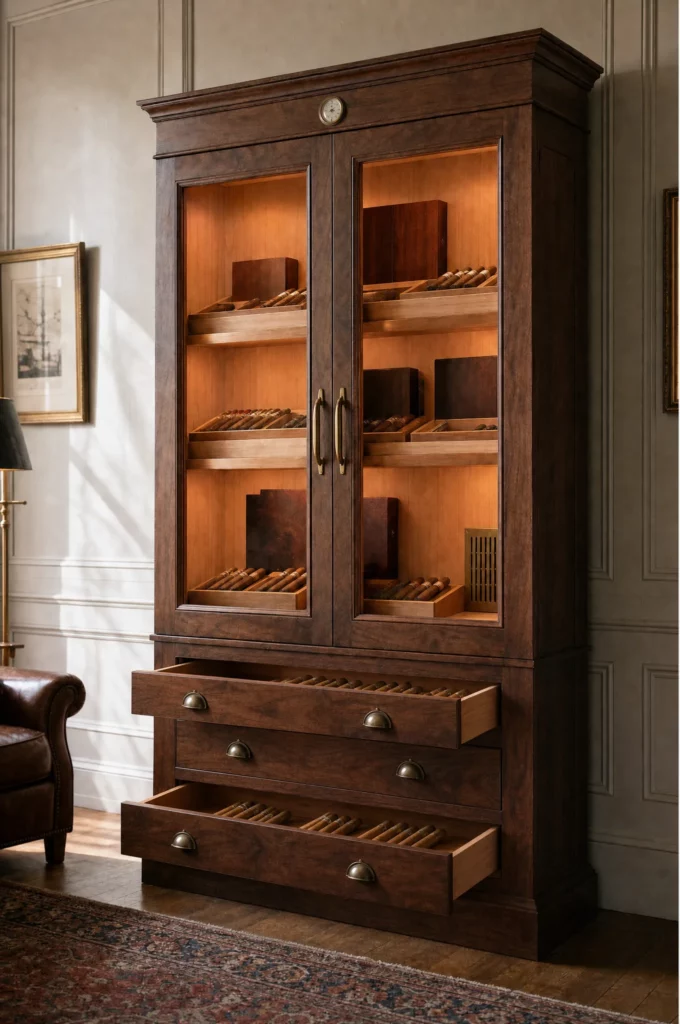
Ageing is not a thing you do to a cigar. It is what happens when you leave it alone somewhere stable for long enough, and it is the reason serious collectors buy by the box and put most of it away. This is what is going on, how long it takes, and what the cabinet has to do to let it happen.
On this page
What ageing actually does
Tobacco carries on changing after it has been rolled. The harsher, sharper notes in a young cigar soften over time and the flavours settle into each other, which is what people mean when they say a cigar has married or rounded out. Strength usually comes down a little. Nothing is added; the change is the tobacco slowly reaching a quieter version of itself.
That only happens usefully in the conditions a cigar is meant to be kept in. Too dry and the oils go and the wrapper cracks, and a dried cigar does not come back as it was. Too wet and it burns badly, and past a point it grows mould. Too warm and you are inviting beetle. So the first requirement of ageing is simply that nothing changes much, for a long time. That is a job for a well-sealed, cedar-lined cabinet held at the humidity we set out in humidity and seasoning, somewhere cool and away from sun and radiators.
How long, honestly
There is no single answer and anybody who gives you one is selling something. A cigar straight off a long journey benefits from a few weeks of simply settling back into stable conditions before it is smoked. Beyond that, many smokers notice a real change over a year or two, and some keep particular cigars for five or ten years and more.
Not every cigar rewards it. Fuller, oilier cigars tend to have more to give; very mild ones can simply go flat. The only reliable way to know is to taste the same cigar at intervals, which is an argument for buying more than one box of something you like and keeping notes.
Boxes, cellophane and loose cigars
The factory box is a good place for a cigar to age. It is usually cedar, it keeps the cigars together, and it slows change down evenly. Collectors who are ageing seriously tend to keep boxes closed and stacked, and open them only to check or take from.
Cellophane is argued about endlessly. It slows exchange with the air around the cigar, so a cigar in cellophane changes more slowly and is protected from handling; a cigar out of it ages a little faster and picks up more of the cedar. Neither is wrong. What matters is that you are consistent, so that you are comparing like with like.
This is why a cabinet for ageing is laid out differently from one for smoking from. It wants standing room for factory boxes behind the doors, not just trays for loose cigars, and shelves that take the depth of a box. Our cigar cabinets are drawn around the boxes you actually buy.
Keeping them together, and apart
Cigars take on the smell of whatever is near them. That is what the cedar is for, and it is also the reason flavoured or infused cigars should never share a cabinet with anything else: the aroma travels and does not leave. If you keep them at all, keep them in their own sealed box or their own compartment.
The same applies, more gently, to very different cigars. Stored loose side by side for years they drift towards each other. Keeping each marque in its own box or its own tray is the simple answer, and it makes the record-keeping easier too.
Bloom, plume and mould
Every cigar collector eventually opens a box and sees something pale on a wrapper. The traditional view is that there is a harmless fine dusting, called bloom or plume, which brushes off and some say is a sign of good ageing, and there is mould, which is not harmless at all.
Mould tends to be fuzzy or raised, often blue, green or grey, sometimes stains the wrapper, and comes back after brushing. Treat anything you are not sure of as mould. Take the affected cigars out, keep them apart from the rest, and look at your humidity reading and your hygrometer before anything else, because mould almost always means the cabinet has been running wet. Cedar and linings covers what to look for in the lining itself.
Turning, rotating and leaving alone
In a well-made cabinet with proper circulation there is very little to do. Cigars at the back and the bottom of a large collection can sit in slightly different conditions from those at the front, so it does no harm to move boxes round every few months, and loose cigars on trays can be turned occasionally.
What does harm is constant opening. Every time the door is open for a long time the reading drops and the lining has to recover. For a collection that is being aged, it is worth keeping the smoking stock somewhere separate, a drawer or a small humidor, so that the cabinet holding the boxes can be left shut.
Keeping a record
The collectors who get most out of ageing write things down: what they bought, when, from where, and what it tasted like each time they tried one. A date on the end of each box is enough to start. Over a few years it turns a cabinet of cigars into something you understand, and it tells you which ones are worth buying again to lay down.
Questions we are asked
How long should I age a cigar?
There is no single answer. Let any new cigar settle for a few weeks in stable conditions first. After that, many people notice a change over a year or two and some keep particular cigars for five or ten years and more. The only reliable guide is to taste the same cigar at intervals.
Should I leave cigars in their cellophane?
Either works. Cellophane slows the exchange with the air, so the cigar changes more slowly and is protected from handling; out of it, the cigar ages a little faster and takes on more of the cedar. Be consistent so you are comparing like with like.
Is it better to age cigars in the box?
The factory box is a good place to age cigars: usually cedar, it keeps them together and slows change evenly. A cabinet meant for ageing should have standing room for boxes, not only trays for loose cigars.
Is white on a cigar bloom or mould?
Treat it as mould unless you are sure. Mould tends to be fuzzy or raised, often blue, green or grey, and comes back after brushing. Separate the affected cigars and check the humidity and the hygrometer, because mould almost always means the cabinet has been running wet.
Can flavoured cigars go in the same humidor?
No. The aroma travels into the cedar and into the other cigars, and it does not leave. Keep infused cigars sealed in their own box or compartment, or in a separate humidor.
Can a dried-out cigar be saved?
It can be brought back slowly, over weeks, by returning it to proper humidity a little at a time, but a cigar that has properly dried rarely smokes as it did. It is far easier to hold the cabinet steady than to recover a cigar.
A cabinet for laying cigars down
Tell us roughly how many boxes you keep and how many you smoke from, and we will draw a cabinet that holds the boxes shut and steady and keeps the smoking stock separate.
Talk to the workshop Humidity and seasoning Walk-in cigar rooms