
Ammunition, Cartridges and Separate Locking
The most common question we are asked on the telephone, and the one where the honest answer is the least satisfying: it depends on your certificate and on your force. What we can tell you is how the arrangement is usually built, and why.
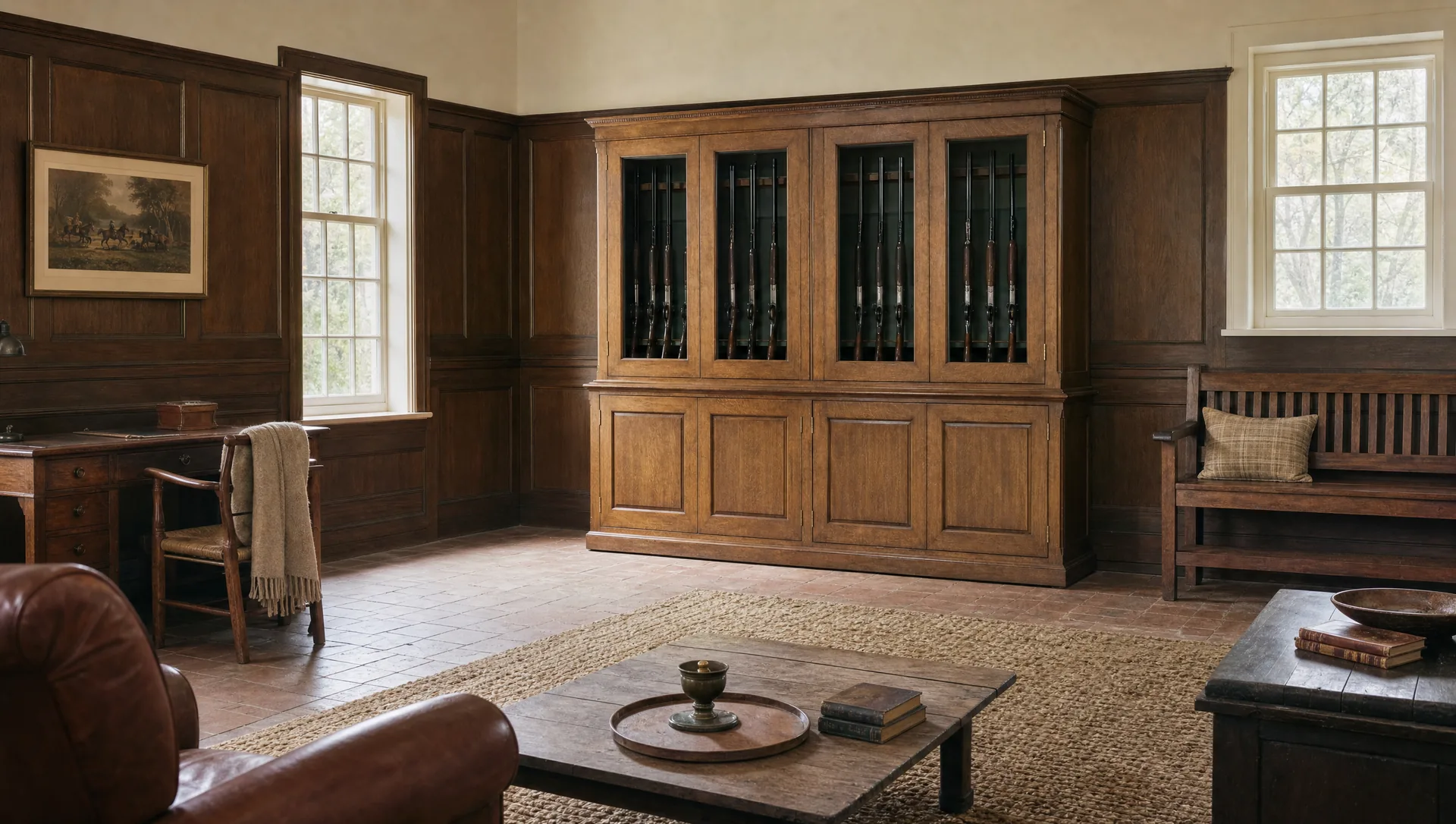
Start with the thing that governs everything else. There is no approval scheme for storage in the United Kingdom and no statute that names a product. Secure storage is a condition on your certificate, and what satisfies that condition is a matter between you and your local firearms licensing department. The Home Office Firearms Security Handbook is guidance to forces, not law, and forces apply it with judgement.
So anyone who tells you flatly what the rule is — including us — is oversimplifying. What follows is how the question usually resolves in practice.
On this page
Why separate at all
The reasoning is straightforward once it is said out loud. The concern is not the gun and it is not the ammunition; it is the two together in the hands of somebody who should not have them. Anything that puts a second obstacle between a forced cabinet and a working firearm is worth having, and a separate lock is the cheapest second obstacle there is.
There is a secondary reason nobody mentions, which is fire. Keeping quantities of ammunition in a separate, contained compartment rather than loose among the guns is simply better practice in a house.
Shotgun cartridges and rifle ammunition are not treated alike
In our experience licensing departments take a markedly different view of a few boxes of clay cartridges and of quantities of rifle ammunition or the components for loading it. The direction of travel is usually that the more concerning the contents, the more separation is expected — a separately locked compartment, or a separate container altogether, sometimes in a different part of the building.
Reloading is its own conversation. Powder and primers are not ammunition and are not stored as though they were, and there is separate legislation about how much may be kept and how. If you load your own, raise it early, because it changes the design of the room rather than the design of a cupboard.
How we build it
Where a client wants ammunition inside the same piece of furniture, the arrangement we build most often is a compartment within the cabinet with its own door, its own lock and its own key, formed as part of the carcass rather than a steel box screwed into the bottom afterwards. It is stronger, it does not rattle, and it does not eat the space you were going to stand a gun in.
Where a client wants it elsewhere, we build a separate piece — often a drawer unit under a cleaning slide, or a cupboard in the boot room detailed to match the rest of the joinery so it does not announce itself.
The detail that matters most: the separate compartment has to be as well fixed as the cabinet. A locked box that can be carried out of the house is a locked box in somebody else’s car. If the compartment is not integral to the cabinet, it is bolted into structure in its own right.
Quantity is the thing people underestimate
Almost every client who has been shooting for a decade owns more cartridges than they think, and the compartment drawn at the design stage is sized for the tidy version of their life rather than the real one. A slab of clay cartridges is bulkier and much heavier than people allow for.
Two practical consequences. Size the compartment for what actually accumulates rather than what you intend to keep, and tell us the weight, because a drawer holding several hundred cartridges needs runners rated for it and a carcass that will not sag in ten years.
Keys, and the point of two locks
If one key opens the cabinet and the ammunition compartment, you have a separate door rather than separate security, and an FEO may well say so. Separate locks with separate keys is the arrangement that survives the conversation.
Where those keys live is a bigger question than which locks are fitted. The usual advice is that they are not kept in the same room as the cabinet, not on a hook, and not in the drawer immediately beside it. Where clients want somewhere sensible, we build a small key safe into the joinery elsewhere in the house.
What to agree with your FEO before anything is made
This is the whole point of the page. The unpleasant surprise in this business is a cabinet built to an assumption and then queried at the visit. It is entirely avoidable.
- Say what you own now and what you expect to own within a few years.
- Say how much ammunition you actually keep, and whether you load your own.
- Show where the storage is going, what the wall is made of and how it will be fixed.
- Ask directly whether they want ammunition separately locked within the cabinet, in a separate container, or in a different part of the building.
- Ask what they would want to see if the collection grows.
We are glad to put the proposed specification in writing so you have something to show rather than describe, and where a client wants it we will speak to the officer ourselves before we cut anything.
Before you commission anything
Send us your gun list, a note of how much ammunition you keep, and a photograph of the wall. We will tell you what we would build, roughly what it would cost, and what is worth agreeing with your licensing department first.
Written from a cabinetmaker’s experience of building storage for real houses. It is not legal advice and it does not state the law. The conditions on your certificate are binding on you, and your local firearms licensing department decides what satisfies them at your address.